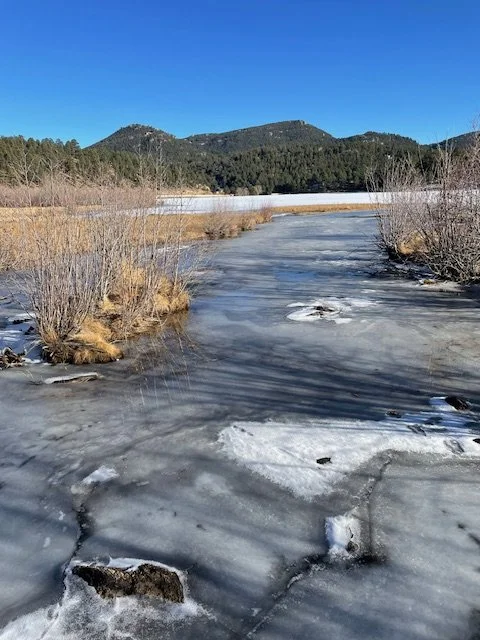
Walking and observing the landscape are central to my practice. Exposed roots, eroding water systems, and layered rock formations reveal the subtle structures that shape both surfaces and subsurfaces over time. Observing human experience reveals a similar architecture.
Rather than beginning with a fixed design, I start with questions about perception, transition, and layered memory. This conceptual process guides the direction so that materials are pushed until relationships emerge, allowing surfaces to rupture, overlap, and expose underlying structures.
Working with paper, textiles, and organic elements, layered compositions emerge through tearing, embedding, and erosion. Torn edges, stitched threads, and tactile surfaces interact to echo natural forces—revealing and concealing fragments to suggest what lies beneath immediate view.
These observations translate into material assemblies that mirror time, movement, accumulation, and change. The resulting works—whether wall constructions or artist’s books—resemble fragments of terrain or cross-sections of human interiority: visual structures that inhabit the threshold between the exposed surface and the hidden self.
Informed by early family travels across western landscapes and the quiet, deep observation honed over years of caring for my non-verbal son, I perceive subtle, underlying realities. This heightened sensitivity fuels a deeply physical approach to utilize the natural world as a structural mirror for human layers, transforming physical geological phenomena into visual records of excavation and depth.