Intended upright display dimensions: 28"W x 9.5"H x 4.5"D
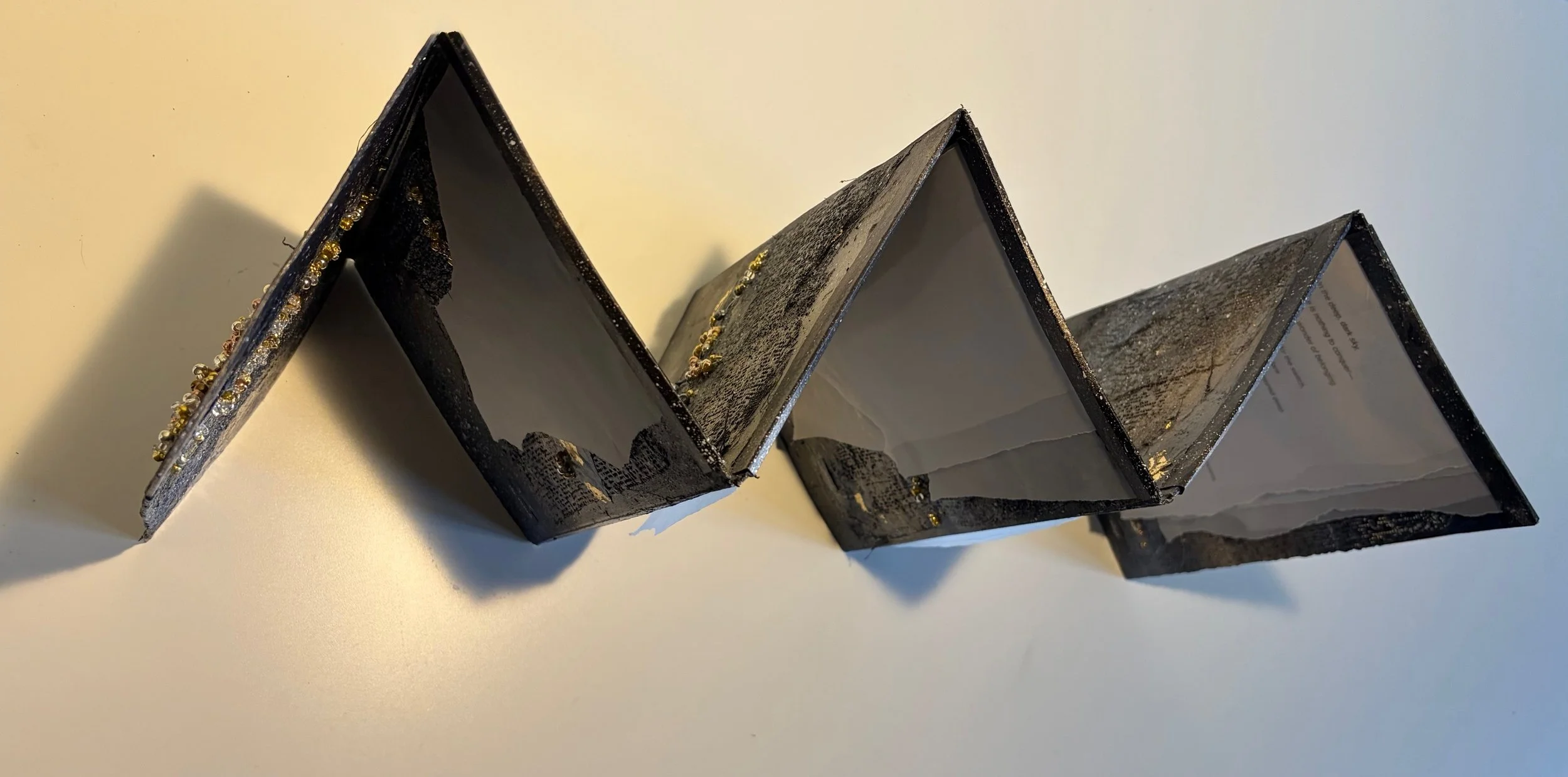
Closed: 6"W x 9.5"H x 3"D
Fully open, laid flat: 36"W x 9.5"H x .5"D
Medium: Mixed media artist’s book; plaster, acrylic impasto, mineral aggregates, glass elements, gold leaf, paper collage, translucent papers and vellum, with original text and poem.
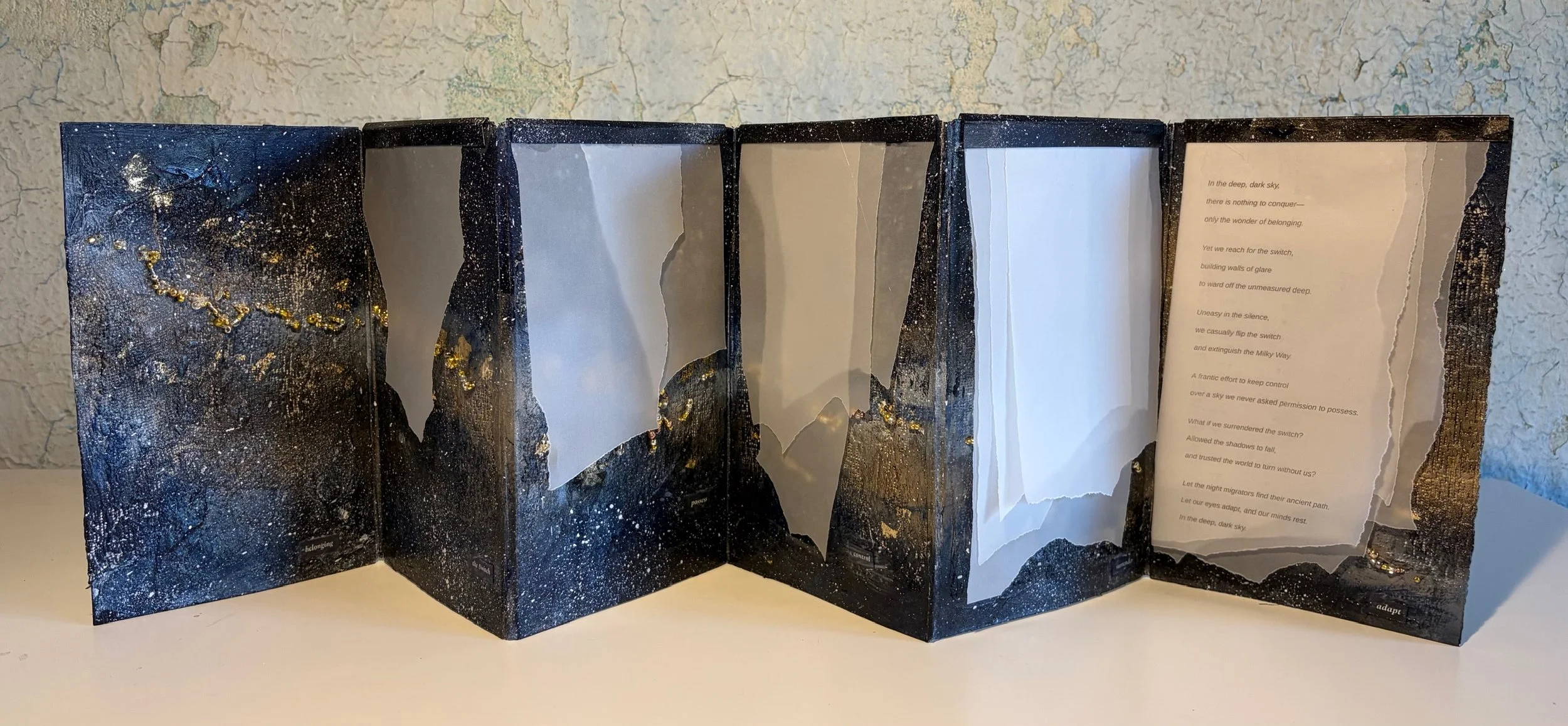
The Switch is a double-sided, six-panel accordion book created in response to the loss of natural darkness through artificial light at night. Its rigid panels are built up with plaster, acrylic impasto, mineral aggregates, glass elements, gold leaf, and paper collage. Deep indigo and ultramarine establish a continuous dark ground, conceptually anchored in Class 1 of the Bortle Dark-Sky Scale, where the night sky reveals extraordinary depth and the Milky Way is clearly visible.
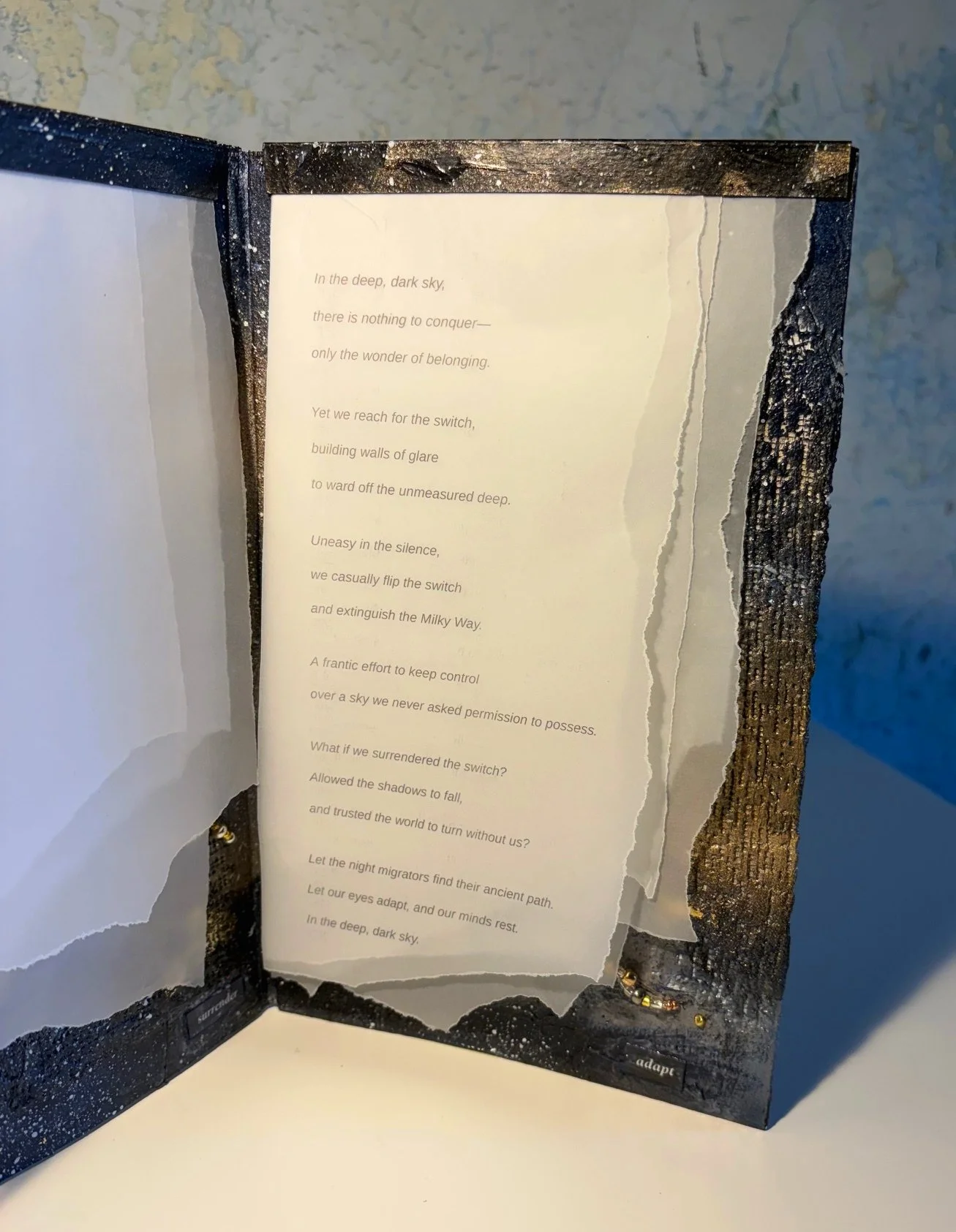
Across one side of the accordion, torn sheets of translucent paper are anchored at the top of successive panels, allowing them to float and move above the textured surfaces. As the viewer unfolds the book, these pale layers accumulate, overlap, and obscure the darkness beneath. The underlying blue remains, while access to its surface becomes increasingly interrupted. The floating materials introduce a tension between the persistence of the natural world and our diminished ability to perceive it.
An original poem, printed in grayscale on suspended translucent paper at the book’s conclusion, considers our impulse to control darkness and our reluctance to accept what we cannot fully see or measure. The poem also turns toward the ecological consequences of artificial light, including disruptions to human circadian rhythms and the navigational cues used by nocturnally migrating birds.
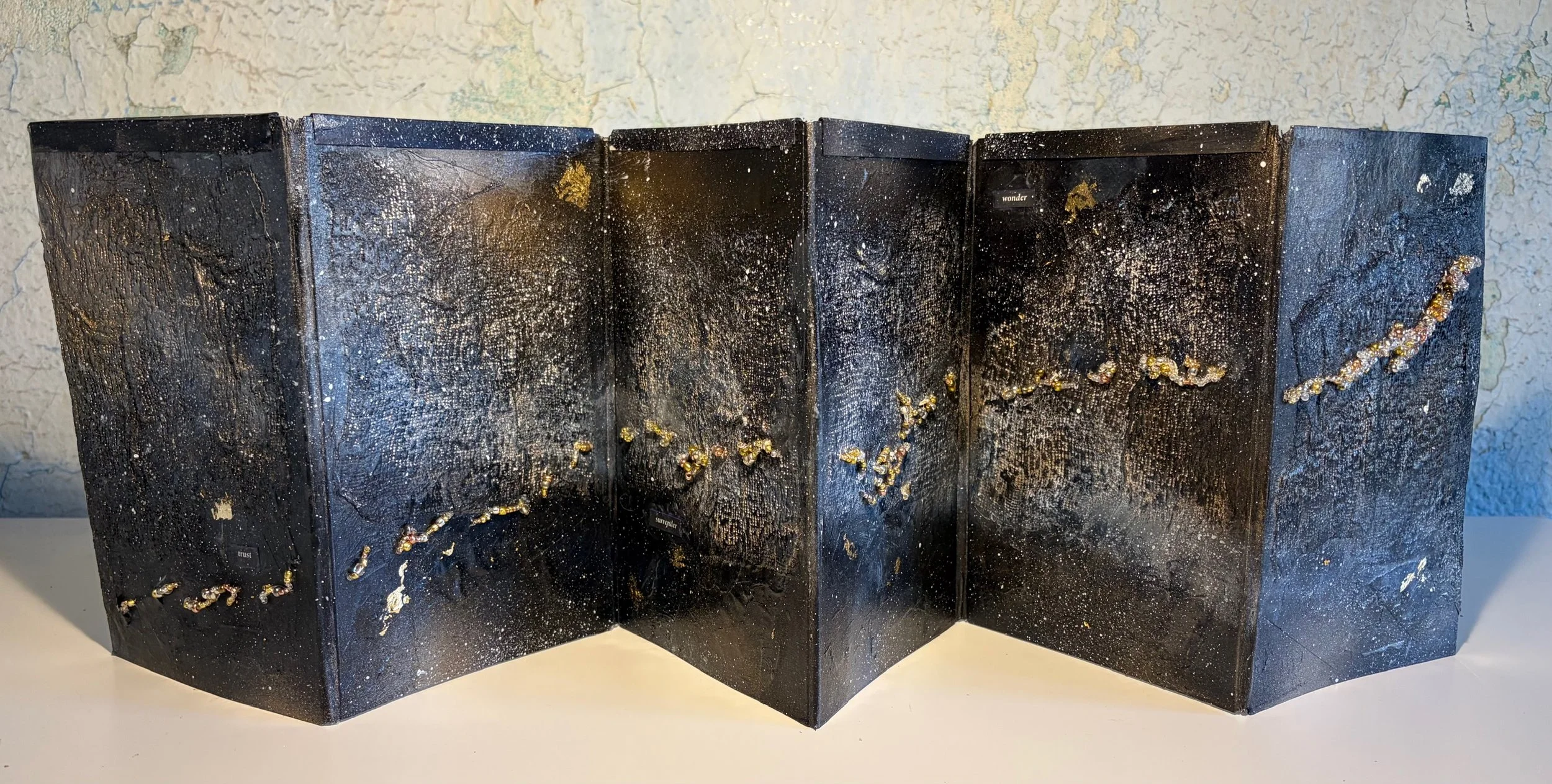
On the reverse, the dark panels offer a contrasting view of the same underlying ground, without the accumulating paper veils. The two sides create a physical and conceptual tension between interference and continuity, inviting the viewer to consider what changes when darkness is obscured—and what might be possible if we allow it to remain.
The Switch does not attempt to diagram light pollution scientifically. Instead, it translates research into a tactile, spatial experience, asking what we lose when we habitually illuminate the night, and whether we can learn to adapt to darkness rather than conquer it.
Research Foundation:
The project draws on DarkSky International’s work on light pollution, John E. Bortle’s Dark-Sky Scale, the Cornell Lab of Ornithology’s Lights Out initiative, and peer-reviewed research on artificial light at night and human circadian rhythms.